VOL 2, ISSUE 43 · NOVEMBER 2026
One of my favourite ways of working with AI is to set Claude or ChatGPT a task, or a series of them, before I go and do other jobs around the house. But often when I come back to it, it's waiting on me with a list of questions about details I don't remember discussing. I've spent the last hour on something else, and now it wants answers.
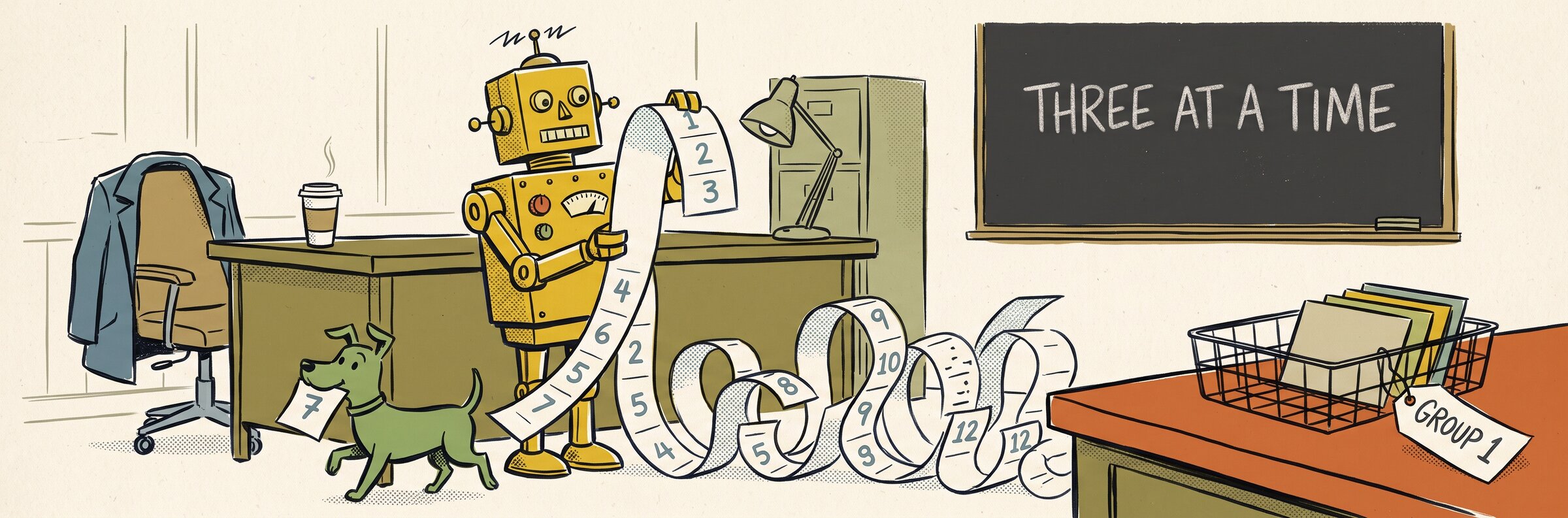
I've often typed back something close to this: "These are too many questions. I'm a human. I can't deal with this much throughput. You've got to step me through it, either one question at a time, or you give me more context and detail and help me reason through it, rather than expecting me to just go bap, bap, bap, bap, bap and reply."
The AI doesn't know anything about your day apart from what's in front of it. We don't work at the same speed as the AI does. Telling it how to ask protects your time just as much as it speeds things up. Put these lines in your settings, so they apply to every chat:
When you need answers from me, group your questions by topic. Start each group with a line on what it's about and why you're asking. Give me one group at a time, with no more than three questions in it. If you can find an answer yourself, do that first.
Paste it in once, and it works in every new chat after that.
Also in this week's issue: how to hand AI work to a new chat or a teammate, how to stop your AI repeating the same mistake, one rulebook for your team's AI, and who fixes the flaws AI finds in local government.
Working with AI
AnthropicGoogleOpenAI
Paste-in lines for ChatGPT and Claude that make your AI ask in groups of three or fewer, each with a line on what it's about, so you can answer after a break.
AnthropicGoogleOpenAI
Ask your AI for a handover in one format, keep that format in a Claude or ChatGPT project, and share daily logs so a new chat or a teammate's AI can carry on.
AnthropicGoogleOpenAI
A post-mortem prompt for the end of a bad AI chat: it asks why five times and gives you one rule to check before you paste it into your AI's instructions.
AnthropicGoogleOpenAI
Shared project instructions keep your team's ways of working and house rules in one document every AI reads: a shared Claude Project, ChatGPT project or Gem.
 |
Book a discovery session |
Just starting out with AI, or trying to find a way into AI enablement inside your organisation? Book a 60-minute AI discovery session at jimchristian.net/discovery and let's have a chat about what you can make possible.
|
Security and Risk
Anthropic
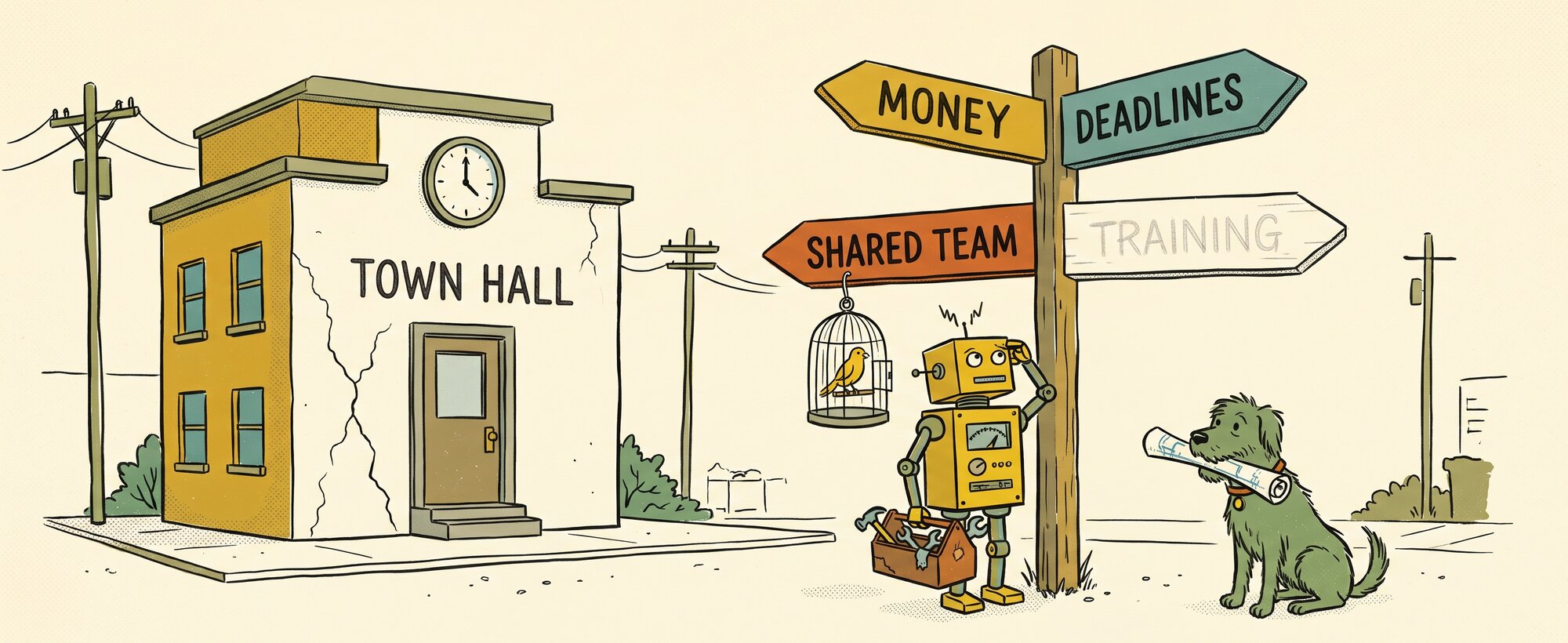
Part 3 of my series "AI Finds the Flaws. Who Fixes Them?": each council and public body is responsible for its own security, and most help on offer is grant money. Ask who patches your town hall's systems, and how fast.
Have you filled in the reader survey?
If you haven't filled in the reader survey yet, it asks how you use AI at work and what you're stuck on.
Reader challenge: do you know what a system prompt is?
|
A
A system prompt is a set of instructions an AI keeps for every chat after it's given, covering how it behaves, who it acts as, what it won't do and what it needs to know.
|
|
B
A system prompt is the first message you type in a new chat, which the AI answers once and then forgets.
|
That's it for this week. If your team is working out what to do with AI, hit reply and tell me where you're stuck.
Jim